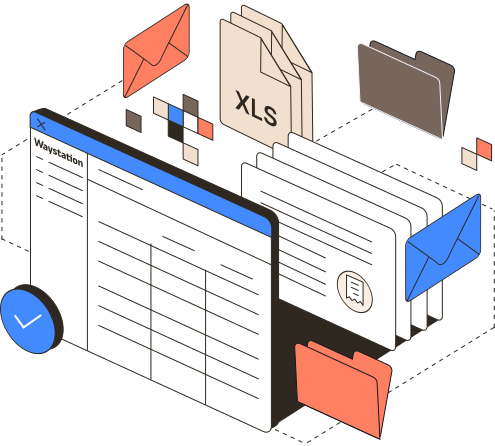
Comparing supplier bids takes minutes when every quote, spec, and certification lands in the same structured table — without asking suppliers to change a thing.
Most sourcing teams still do this the hard way. Bids arrive as PDFs, spreadsheets, and loosely written email threads. Pricing, specs, MOQs, and certifications show up in every format imaginable. Someone on the team copy-pastes them into a master sheet, chases missing fields, and flattens it all into something decision-ready — usually a week late.
Waystation collapses that work. AI reads supplier emails and attachments as they arrive and turns them into a clean, side-by-side comparison your whole team can act on.
How bid comparison works inside Waystation
Inbox integration and auto-ingestion
Waystation connects directly to your team’s inbox. No supplier logins. No portals. No behavior change.
As supplier emails and attachments arrive, Waystation extracts pricing, specs, MOQs, certifications, and lead times — even when the format varies wildly across vendors. Suppliers never sign up for anything and you don’t integrate with anyone else’s system.
Auto-built comparison tables
Every supplier submission is pulled into a single, easy-to-read table. Each bid is structured across the criteria that matter: price, origin, minimum order quantity, specs, certifications. If something is missing, it’s flagged clearly — you know exactly who to follow up with and why.
No more building sheets from scratch. No more cut-and-paste errors. Instant visibility into what’s comparable, what’s complete, and where the gaps are.
Auto-drafted follow-ups
Missing information doesn’t mean manual follow-up. Waystation drafts personalized, context-aware emails to suppliers with one click — each one populated with what’s missing and why. As responses come in, the table updates in real time.
A centralized, editable source of truth
Instead of version-controlled spreadsheets scattered across inboxes, Waystation creates one shared record. Procurement, ops, R&D, finance, and QA all see and edit the same table in real time. Manual edits are always possible to reflect real-world nuance.
Why instant comparison changes the business
Better margins. When comparing bids is instant, your team can run more RFPs across a greater share of spend without adding headcount. More suppliers per cycle means more competitive pressure. Even modest increases in bid coverage compound into real savings — Gold Coast Bakery identified more than $200K in annualized savings inside 90 days, averaging 11.7% per ingredient.
More reliable supply. When every quote, spec, and certification lives in one place, onboarding a new vendor or validating a backup stops being a scramble. JUNKLESS Foods now has secondary sourcing on 25%+ of ingredients — a resilience posture that used to take quarters to build.
Easier supplier diversification. Running more bids lowers the bar to evaluate new vendors. Vetting, engaging, and comparing a broader pool becomes a practical strategy, not a logistical project.
Higher-quality decisions. Price matters, but spec match, certifications, production standards, and delivery terms matter more. With every offer standardized and side-by-side, your team spots mismatches and flags gaps before they become problems.
Faster launches. Procurement should accelerate product development, not gate it. Missing details get flagged automatically, follow-ups go out instantly, and cross-functional alignment happens inside the tool.
The strategic payoff
Supplier data stops being scattered across inboxes and starts being structured, centralized, and instantly actionable. Your team trades email triage for leverage, insight, and control — and you get there without asking suppliers to change anything.